Tag: Chicago

Christopher House Hosts 2025 Erikson Executive Fellows

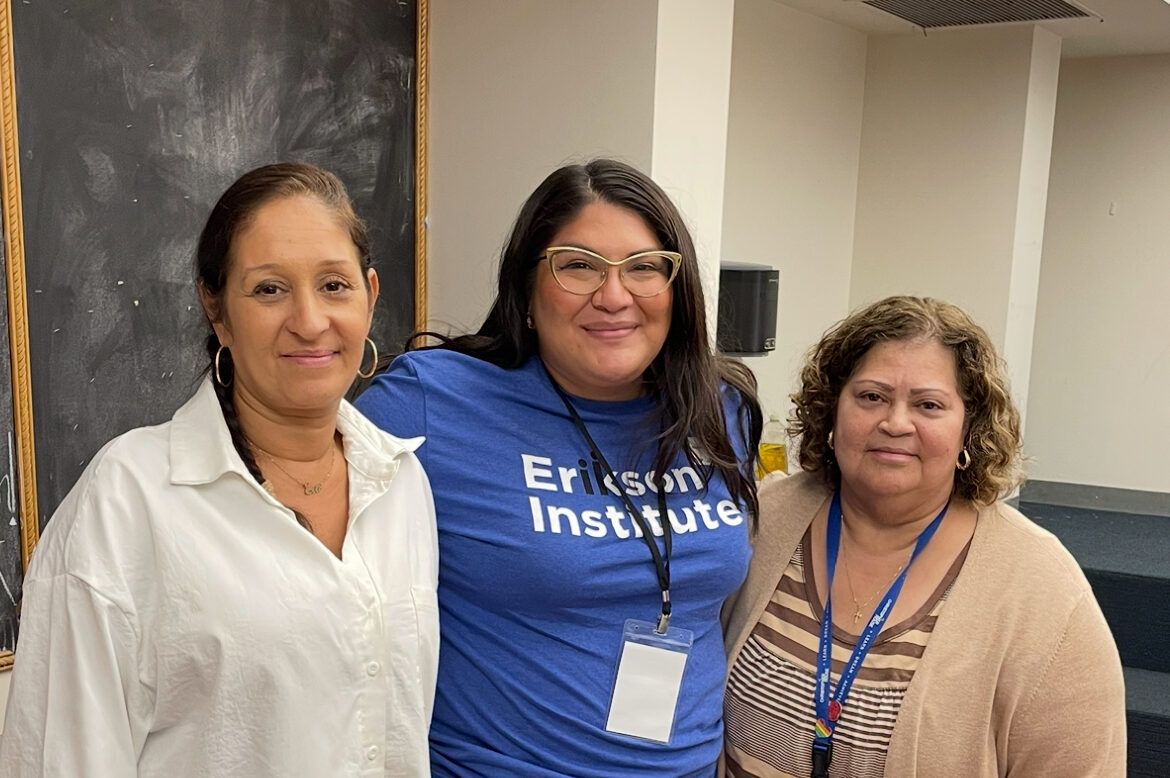
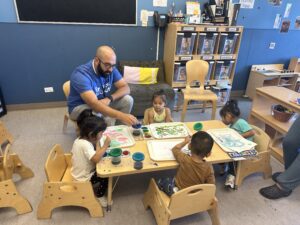
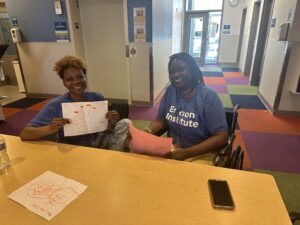
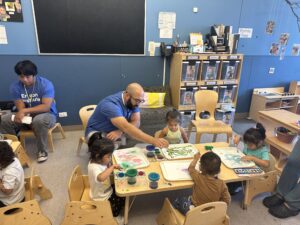
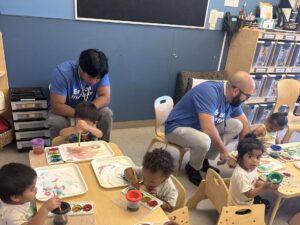
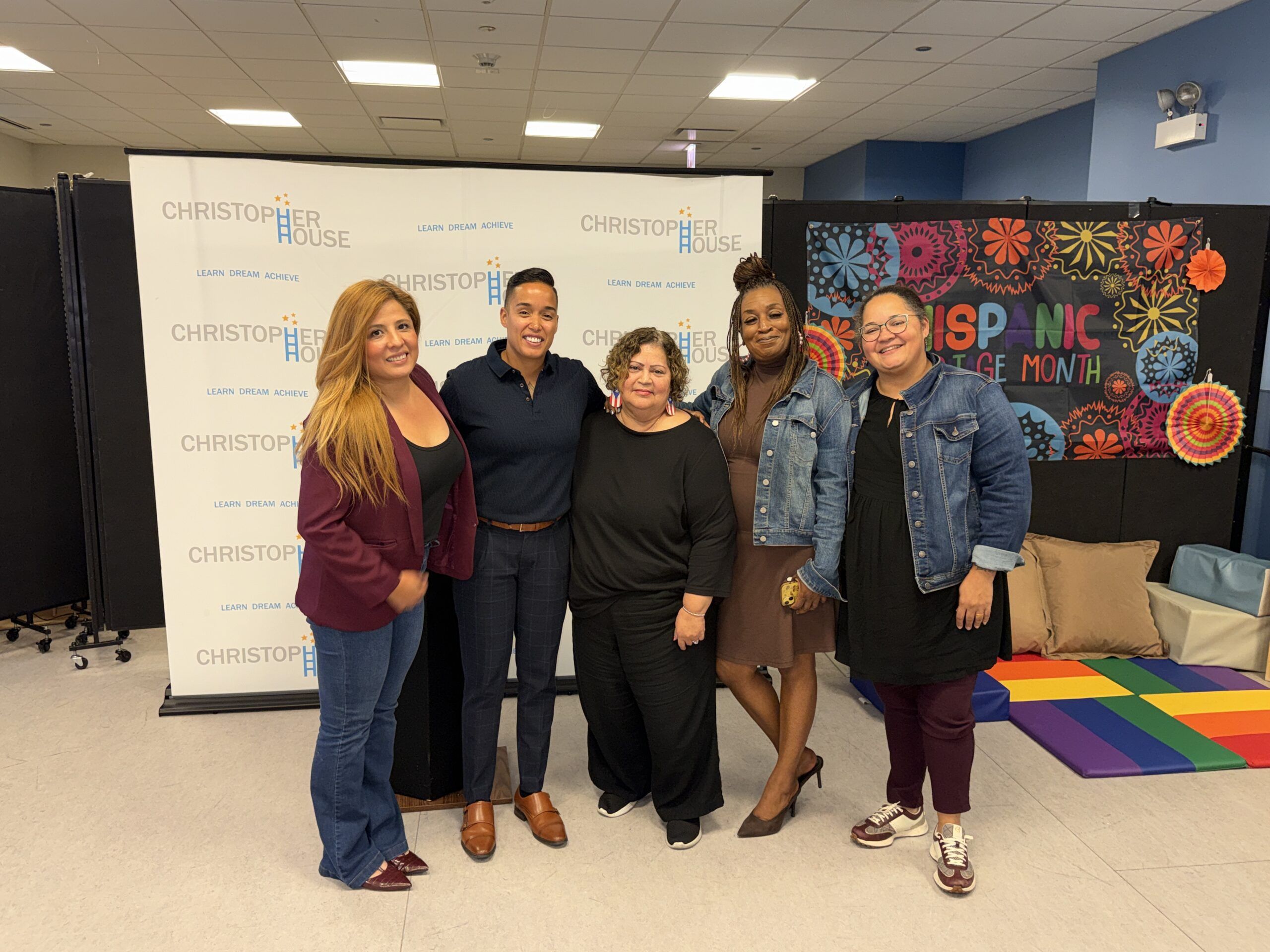
Christopher House was proud to once again partner with the Erikson Institute’s Executive Fellows Program this year, welcoming a distinguished group of Illinois leaders to our early childhood and administrative sites.

The Executive Fellows spent the day observing classrooms, engaging with educators and scholars, and meeting with our leadership team to learn about Christopher House’s holistic approach to early learning. They also gained perspective on the systemic challenges our families and staff face, and how innovative supports—from family advocates to school-based health services—are helping children thrive.

The Erikson Executive Fellows Program equips leaders across education, government, law, and healthcare with a deeper understanding of the long-term impact of high-quality early childhood experiences. This knowledge helps inform policy decisions and strengthens opportunities to improve services for children and families statewide.

This year’s Fellows included:

  • Senator Graciela Guzman, Illinois 20th District

  • Judge Kim Lewis, Juvenile Court Child Protection Division, Circuit Court of Cook County

  • Joshua Long, Chief Officer, Office for Students with Disabilities, Chicago Public Schools

  • Dr. Erica Austin, Deputy Director, Southern Illinois University School of Medicine

  • Dr. Michael Karner, Regional Superintendent of Schools, Lake County

By hosting Fellows in our classrooms and offices, Christopher House ensures that the voices of our children, families, and educators are heard by those shaping policy and practice across Illinois. The day reinforced the critical role of early learning in advancing equity and building stronger communities.

We are grateful to Erikson Institute for cultivating leaders who champion early childhood education, and we are honored to continue this important partnership.

Christopher House Elementary School Family Advocates: Our Role and Our Heritage

Christopher House is built on a two-generation model that meets the needs of our scholars and families, both in and outside of the classroom. This vital work extends across all three of our campuses – Belmont Cragin, Uptown, and Logan Square – and at Christopher House Elementary School (CHES), it would not be possible without the dedication, compassion, and expertise of Family Advocates Diana Villalba and Lesly Lopez.

Joining Christopher House at the height of the pandemic in 2021, both Diana and Lesly were immediately drawn to the empathetic and holistic support offered to the families of our scholars. With Diana’s degree in Psychology and Child Advocacy Studies, and Leslie’s in Human Services and Psychology, both were eager to find the right opportunity that would allow them to have an impact on the lives of their community members. Both Family Advocates have a deep and personal feelings that pulled them toward Christopher House and t they knew that they had found a place they were excited to call home.

We had the opportunity to sit down with Diana and Lesly to learn more about their roles as Family Advocates at Christopher House Elementary School and how their culture, language, and traditions are essential to their work.

What is a CHES Family Advocate?

Lesly Lopez: As Family Advocates, we help families feel safe and comfortable so that they can be open with us and trust us to help get whatever assistance they need. We build relationships with the parents and caregivers of our scholars and help connect them with any additional resources that they might need – we help with everything from obtaining financial assistance and applying for SNAP, to acquiring Ventra cards and accessing immigration-related resources.

Diana Villalba: Our goal is to create and maintain stability within the home. Many of our families have experienced racial trauma and encounter barriers daily. We do whatever we can to respond to their needs and find resources that will help, whether that is inside our walls or within the surrounding community. We also act as a bridge between families and our teaching staff. If parents need assistance communicating with their child’s teacher, or if a teacher notices a student in need of additional support, they reach out to us, and we help facilitate connections and conversations.

Why is our two-generation model important for our scholars and their families?

Diana: My family is from Mexico, and we lived in Los Angeles before moving to Chicago. As a child, I watched my family struggle. My dad worked a lot and when my mom wasn’t working part-time, she was with us. She spoke Spanish, and she had a really hard time communicating with teachers or administration when she came to the school. Seeing and experiencing this for myself has helped me understand what our families are experiencing.

Lesly: I can relate to that a lot… I’m also Mexican and Latina, and my family struggled financially when I was young. We didn’t have any additional support outside of the family, and my mom also only spoke Spanish. She would do her best to advocate for me and my siblings, but because of the language barrier, she often felt unheard. Being in the role that I am now, I am very passionate about what I do because I get to offer the help and support that I wish my family had when I was growing up.

How does your identity and culture support you in this role?

Diana: We can’t support families unless they feel comfortable to be open and honest about their needs. Whatever we can do to facilitate trust between us and the parents and caregivers, we do! We primarily serve Hispanic and Latinx families here at CHES, and when families hear me speak Spanish, it automatically removes one more barrier for them. It makes it easier for them to trust me and open up without any added pressure. I just let families know that a safe space for communication exists whenever they want or need to use it.

Lesly: I agree! When parents come in and see that you are able to speak their language, it creates a sort of immediate natural connection. We can understand their lived experiences on a personal level and can relate to what they are going through. During the pandemic, some families feared that their concerns and needs were not going to be heard. But when we joined the team, we were able to quickly form strong connections and alleviate their stress by letting them know that we see them, we hear them, and we are here to help them – always.

Why is it important to celebrate the identities of our staff, scholars, families, and community members?

Lesly: In my culture, family values are deeply ingrained in everything we do. If someone is hurting, we all are, and if someone is celebrating a win, we all celebrate with them. You don’t want to lose the values of where you come from, no matter what they may be. For our students and families, it’s important they see that when they walk in the school, their traditions and identities don’t stop at the door. We do our best to bring that part of home into the classroom and celebrate it for its importance and beauty. 

Diana: For my family of five, we try to get together at least once a month and reconnect over good food, music, and dancing, but honestly, no matter how much time has passed, it’s like we were never apart. I’m also a first-generation college graduate and a proud Mexican. The two are connected! My background has helped me connect with and support families in my current role, and I think it’s really important for my nieces and nephews – and our scholars and families – to see that and to know that there are educational and career pathways for them too. Truly anything is possible.

Christopher House Hosts $50 Billion Illinois State Budget Signing

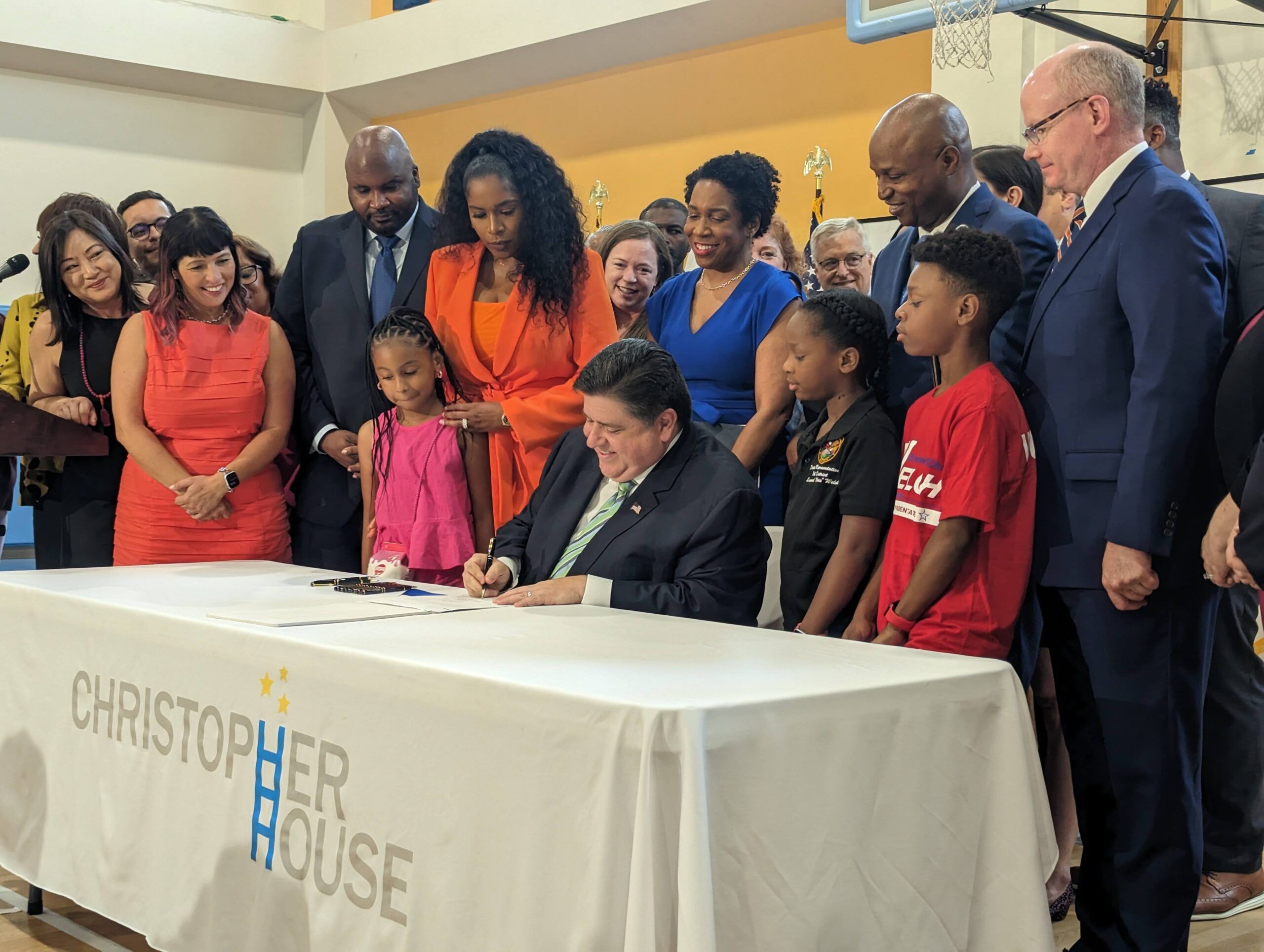
Christopher House was honored to host Illinois State Governor JB Pritzker and members of the General Assembly for today’s signing of the 2024 state budget, one of the largest budgets to date.

While balancing fiscal responsibility and compassion for the community, the new state budget will allow for increased funding to support early childhood, elementary, and higher education, as well as health and human services and homelessness prevention supports.

“Thanks to our firmer fiscal foundation, we have been able to put billions of dollars back into the pockets of Illinois taxpayers while investing in our future,” IL State Governor JB Pritzker said. “Our budgets have allowed thousands more students to stay in Illinois because they can afford a college degree. Balanced budgets have allowed us to modernize our infrastructure, build nation-leading clean energy production, attract industries of the future like quantum computing, and prioritize childcare for working families and our youngest children.”

The new Smart Start Illinois program, a $250 million initiative enacted to stabilize, support, and grant more accessibility to early childhood education, will help support Illinois’ Early Childhood Education programs, like Christopher House and our Early Childhood Education program that services over 300 scholars, from six weeks to 5 years old, across our three campuses located in Belmont Cragin, Uptown, and Logan Square. Smart Start Illinois’ aim is to increase preschool availability, advance Kindergarten readiness to actively prepare our youngest scholars for a lifetime of learning, and invest in the Early Childhood Education workforce. Christopher House too recognizes that high-quality education starts with our teaching staff and will subsequently continue to prioritize pay equity for our teachers and staff.

Over $1 billion dollars have been dedicated to supporting the families of our community through much needed health, human, and homelessness prevention services. Christopher House is heartened by the advancements made in community support by our State Government and the widespread recognition of parents as a child’s first teachers. Our organization operates using a two-generational model that works at the nexus of education and social services by providing holistic support to the families of the children we serve through Family Advocates, counselling services, parent workshops, and additional family supports, like three on-site food pantries and emergency rental assistance.

“We were honored to host today’s budget signing, and we are really excited about what additional funding will mean for our children and families,” Christopher House Chief Executive Officer Libby Shortenhaus said. “Early investments reduce spending in later years of education, reduce gun violence, and create strong communities in which people want to live and work. There are so many needs in our communities, but few are more important than high-quality Early Childhood Education.”

For more information, click here to read the full Illinois State press release.

Christopher House
5235 W. Belden Ave.
Chicago, IL 60639